Resources:
Check out my blog post here.
What to do:
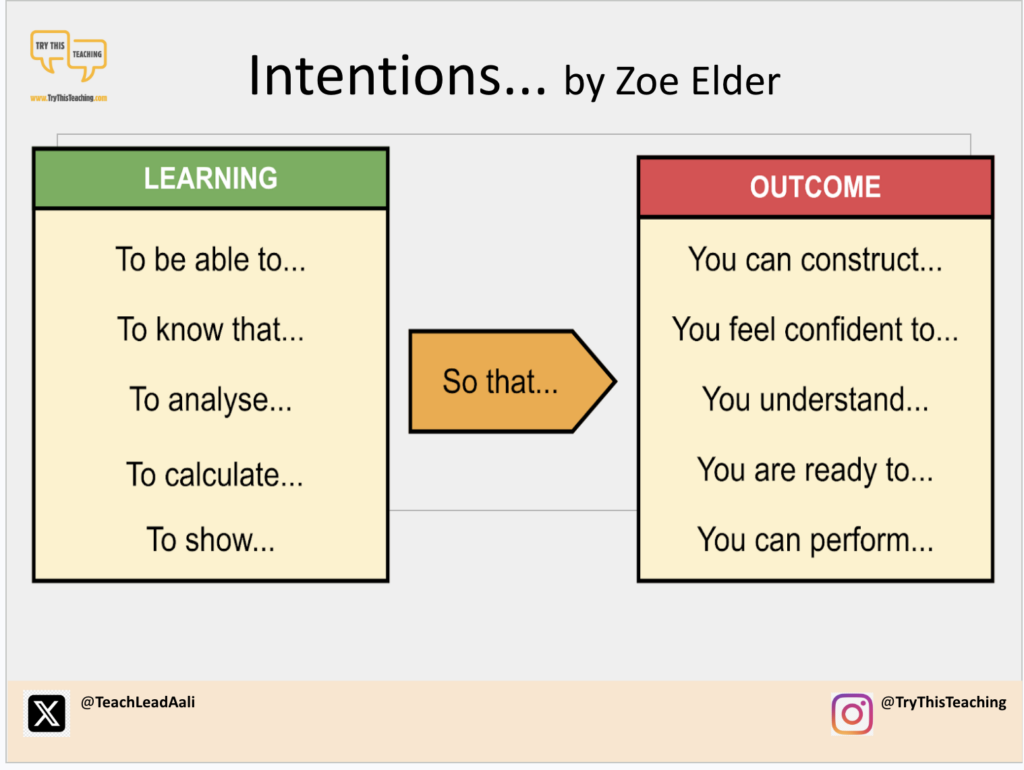
In practice, this works like a simple causal scaffolding:
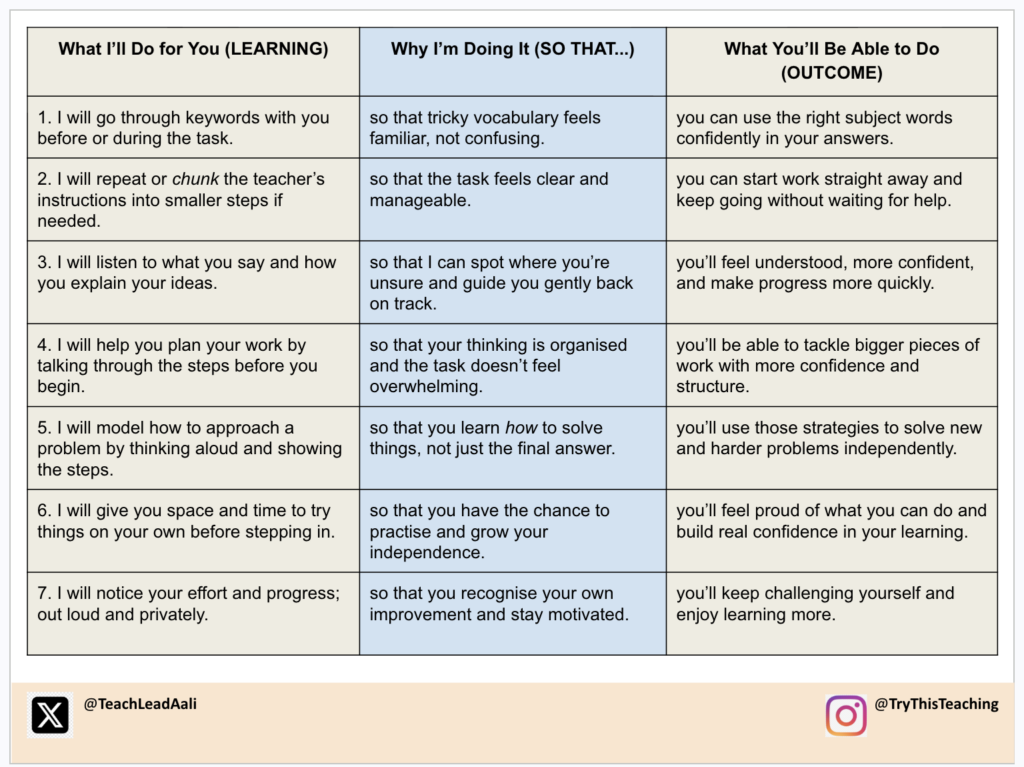
You can extend “So That” into dialogue with learners (“we’re doing X so that you can…”), which builds ownership of the learning process.
It compels teachers to articulate why each activity exists, not just what it is.
That clarity makes success criteria visible from the start, rather than something retrofitted at the end.
It pushes out vague language and assumed understanding, creating intentional coherence across a lesson or session.
Transparent purpose supports learner agency: students understand both the task and the reason for it.
Firstly, for your lesson intentions…
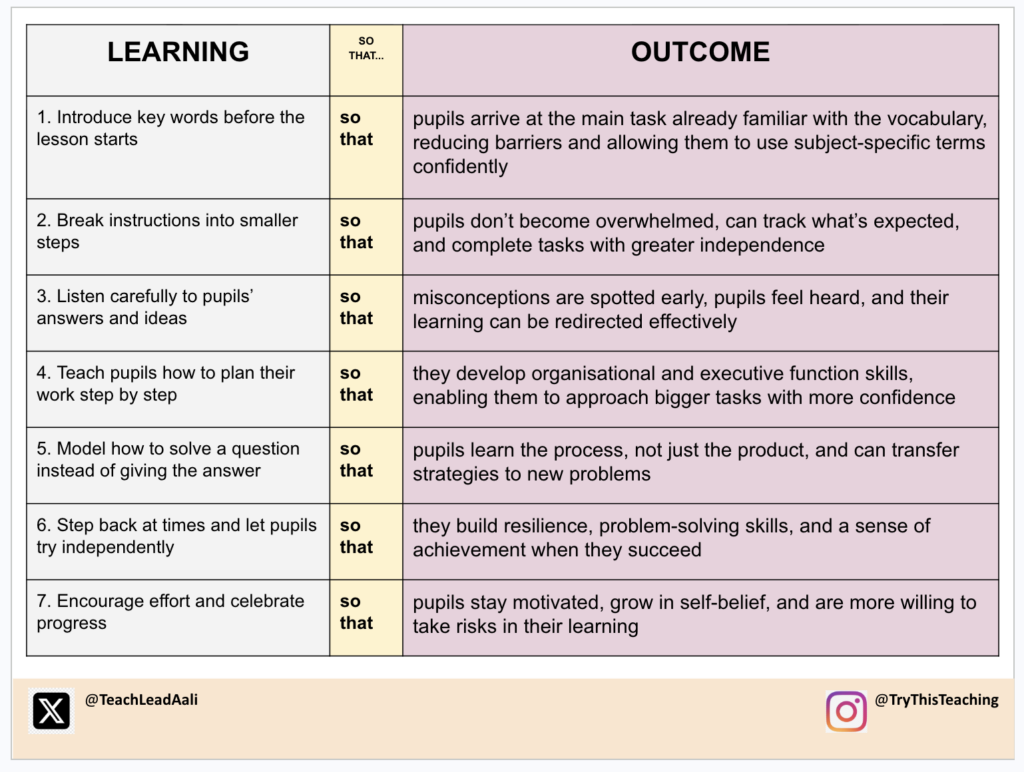
Use for CPD Delivery…
Rationalising your choice of lesson scaffold/support/adaption
At a deeper level, it’s a reflective and design habit that sharpens thinking and helps weed out activities that don’t meaningfully contribute to intended outcomes — a bit like asking “If we can’t justify why something matters, should it really be there?” in learning design
Variations:
Consider- The “Power of ‘So That’” blog post on NewToThePost is all about making learning intentional by forcing clarity of purpose in teaching design. Rather than just listing what you plan to do, you link each learning action to why it matters — what learners will be able to do as a result of it. That “So That” connective becomes a lens for purposeful design and explanation, helping both teachers and learners understand not just the what but the so what of every part of a lesson or CPD sequence.